If you have ever been associated with farm life, you know that lambs wander.
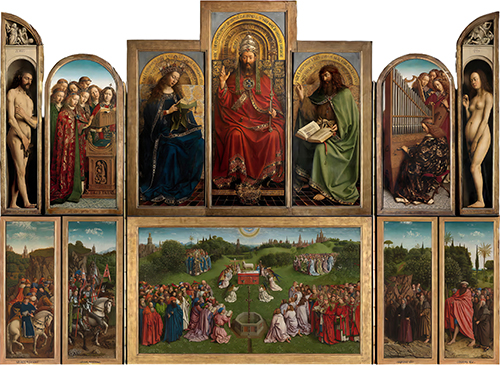
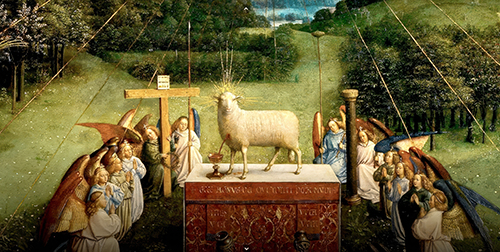
One of history’s most famous “wandering lambs” is the Ghent Altarpiece, also known as the Adoration of the Mystic Lamb. A massive and complex 15th-century masterpiece, the altarpiece was created for St. Bavo’s Cathedral in Ghent, Belgium. Begun in the mid-1420s and completed by 1432, the work is attributed to the brothers Hubert and Jan van Eyck.
However, the painting has had a remarkably eventful—and perilous—history. During its nearly 600-year existence, the Ghent Altarpiece has been:
- Nearly incinerated by rioting Calvinists.
- Seized by Napoleon and taken to the Louvre in Paris.
- Sawn in half after falling into the possession of the King of Prussia.
- Coveted by Hermann Göring and eventually stolen by Adolf Hitler.
- Rescued from an Austrian salt mine, where it was rigged with dynamite and destined for destruction.
The altarpiece is a monumental polyptych with hinged wing panels. Traditionally, it remained closed, displaying only the Annunciation to the public. It was opened only on holy days to reveal the vibrant interior. Through this design, the artists skillfully remind us where our story begins: the Word made flesh because a young woman dared to say “yes.”
Today, a question remains: Do I allow the Lamb to wander, or have I penned the Lamb for my own use?