
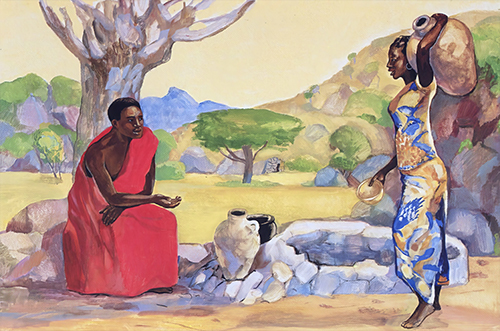
The Woman at the Well, recounts the encounter between Jesus and the Samaritan woman.
It has been painted often, written about at length, and preached with frequency.
It reminds me of a dishcloth in the kitchen — much used and wrung dry countless times. The more words written and spoken, the more the reality becomes hidden beneath them.
Each author or preacher attempts to find some new and enlightening angle.
Many focus on Jesus as he shatters the taboos of his time — and ours. Gender discrimination, ritual purity (sharing a drinking cup with a Samaritan), socio-economic poverty (any woman married five times was likely poor), religious hostility, and the moral stigma of serial marriages.
And yet the woman is left nameless. She is not alone in this Gospel ignominy — but how would you feel, being spoken of without a name?
Here is a picture to sit with. It comes from Vie de Jésus Mafa (Life of Jesus Mafa), a series of paintings undertaken in the 1970s to help teach the Gospel in northern Cameroon.
Notice the grace of the woman. The way she carries herself. Her elegant walk.
Our Gospels, by tradition, were written by men. Have you ever considered how these stories might read if written by women?
This Sunday, be bold. Sit with this woman and let her tell her story.