
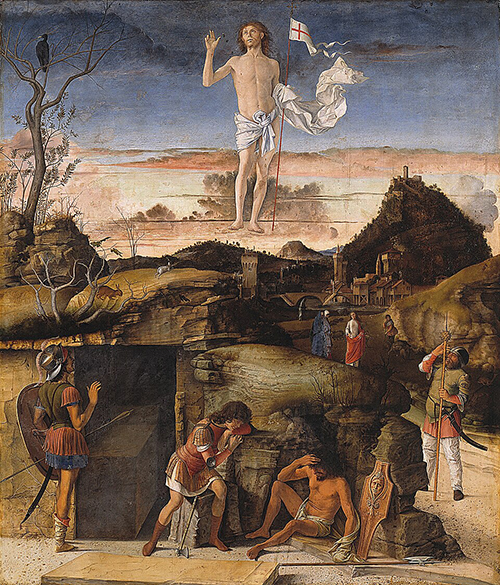
A perusal of Western religious art depicting the Resurrection of Jesus reveals a consistent pattern — Jesus is painted as going out and up. Some works indeed almost mirror the Ascension.
The art of the Orthodox tradition of Christian spirituality is the opposite. Within frescos and mosaics, the movement of Jesus is downward.
Within the Apostles’ Creed we pray that truth: “He suffered under Pontius Pilate, was crucified, died, and was buried; he descended to hell. The third day he rose again from the dead.”
One of the most famous depictions of this “downward” movement is the Anastasis, painted in the apse of the funeral chapel of the Church of the Holy Saviour (usually known simply as Chora) in present-day Istanbul.
First built in the 4th century, the Chora Church has been transformed through history into different functions, adapting to the political climate of Istanbul.
At the centre of the fresco stands a radiant, resurrected Christ. He stands on two broken gates of hell, with keys and locks festooned about them.
Flanking Christ are two sarcophagi, from which he draws Adam and Eve. He extends his hand in grace, pulling them — and by extension all of humanity — from the tomb.
On this second Sunday of Easter, known as Divine Mercy Sunday, the fresco from the church at Chora may provide a meditation around the theme: “I will come to you in your place of need and lift you out of that place.” Does that sound like mercy at all?
Resurrection of Christ is a painting by the Italian Renaissance artist Giovanni Bellini and is held at the Gemäldegalerie, Berlin.
The Anastasis fresco is part of a number of frescos found in the Church of the Holy Saviour at Chora, Istanbul.