Feast of the Epiphany

To describe Gentile da Fabriano’s “Adoration of the Magi” as “busy” might well be an understatement.

Completed in 1423, the masterpiece was originally an altarpiece commissioned by wealthy banker Palla Strozzi for his family chapel in the sacristy of the Church of Santa Trinita. Today, the painting is held in the Uffizi Gallery in Florence, Italy.

The three wise men are dressed in extraordinarily rich, fashionable garments. They are accompanied by a multi-ethnic procession that includes exotic animals.

The painting was not designed to be taken in at a single glance. Instead, the viewer is enticed to return and look again and again. With each look, more is revealed.

There is an abundance of people and a curious menagerie. A close look reveals horses, the head of a lioness and even a monkey, though there are no camels.

The Magus kneeling in front of the infant raises a provocative question: Is he being blessed, or is he checking that the newborn is male? It is a visceral way of declaring that “the Word became flesh and dwells among us.”

The Feast of the Epiphany is a celebration of inclusion. The riot of persons and color in this painting encourages such a spirit.

Perhaps that is the reality of the feast—to return, to look again and to let the story of the Magi reveal itself further. And, if we dare, we must ask: “How inclusive is my Church?”

Christ the King

The Danish sculptor Bertel Thorvaldsen (1770 – 1844) was commissioned to sculpt a figure of Christ called Christus.

The original stands in Copenhagen Cathedral.

Perhaps this sculpture’s most frequently retold story centres on Thorvaldsen’s frustration in creating the proper position for Christ’s arms.

Thorvaldsen’s early sketches and models show Christ’s arms raised above his head in the blessing position.

Thorvaldsen had prepared the model with the outstretched arms raised above the head of the figure of Christ.

The framework used for the model could not sustain the weight of the clay, and the arms slumped during the night from the blessing position to the waist.

Upon seeing this new pose when he arrived the following day, Thorvaldsen quickly made it permanent.

Today, when you view the finished statue, the arms and hands are open and inviting.

This may well be an image for us to reflect on as we celebrate this feast of Christ the King.

Perhaps the most real blessing is a posture of open arms and hands, exclaiming, as the inscription at the base of the sculpture reads, “Kommer til mig” (“Come unto me”) with a reference to the Scripture verse from Matthew 11: 28


33rd Sunday of Ordinary Time

Our Sunday Gospel is familiar to many of us. (Matthew 25: 14 – 30)

It is headed as ‘The Parable of the Talents’ and is in many Gospel editions.

It includes the line, “But the one who had received the one talent went off and dug a hole in the ground and hid his master’s money.(v. 18)

TradeMe is New Zealand’s largest online auction and classifieds website, where you can bid for everything from a pair of socks to a holiday house! The site was founded in 1999 by a young New Zealand entrepreneur, Sam Morgan. Morgan sold the enterprise in 2006 for $700 million dollars!

One of the more notable auctions happened in May 2009. The advertisement read, “Buy a Tractor and get a 20-acre farm for free.” Purchase of the tractor did come with one rather unusual added feature: a farm, the 8.1h block in the Catlins was an added bonus for whoever wins the tractor auction.

TradeMe lists has one of its busiest times of the year being immediately after Christmas – the online site is flooded with unwanted Christmas presents!

Lawnmowers, hair dryers, air fryers, cookware set, electric razors – the list is endless!

So, when does a present become a gift? When does it cease to hold the attribute of giftedness? When can it be hidden in the garden?

Have you ever held onto a gift, not because of any need you have for the gift but rather because of the one who has given you the gift!

Each time you open the cardboard and espy the unneeded blender, or perhaps open the wardrobe and see the bathroom robe, which is not your colour – memories of the one who gave you the gift flood the memory and the heart.

I suggest this is the true purpose of the gift – to re-member.

When my God has flooded me with the gift of words of the writer, or the palette of the artist, or the green fingers of the gardener, then these words, colours and green fingers offer me the opportunity to remember and to sing as the Psalmist sings:

“They are more precious than gold,
than much pure gold;
they are sweeter than honey,
than honey from the comb.” (19:10)

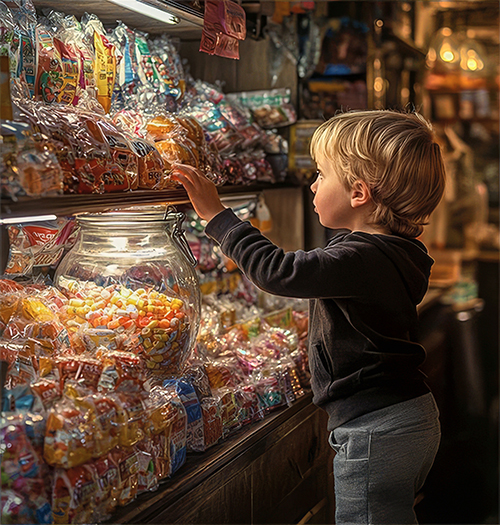
The intriguing by-line which accompanies this image reads, “Must have kitchen tools: 10 amazing kitchen tools to make your life easy.”

If only life could, indeed, be made easy through the purchase of kitchen tools?!!

32nd Sunday of Ordinary Time

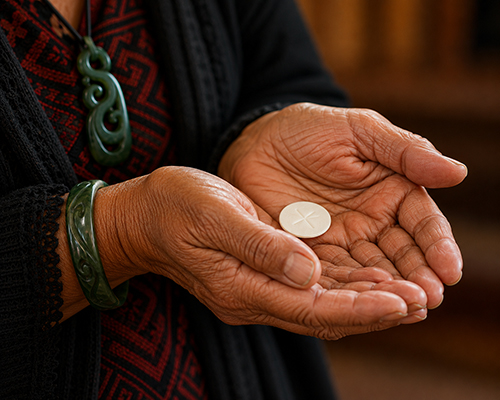
The illustration is a painting by Charles Goldie titled “Memories”.
The subject is Ina te Papatahi, a Nga Puhi Chieftainess. Painted in 1906, the painting is housed at the Auckland Art Gallery.

Sometimes, I wish the First Reading of our Liturgy of The Word were a last read!

By then, we’re settled; the noise of a community gathering has settled, songbooks have been put away, the order in which the children ought to sit between Mum and Dad has been determined, the money for the collection has been found, and the nose has been cleared of mucus one last time.

We are now ready to listen.

This Sunday’s First Reading is taken from the Book of Wisdom (Wis. 6: 12 – 16).

In this book, and indeed the Book of Proverbs, Wisdom is portrayed as feminine.

In today’s reading, we read the lines, “Watch for her early and you will have no trouble; you will find her sitting at your gates. “

“You will find her sitting at your gates” – a superb image!

And where do you find a gate? Usually outside of the house you live in! It is the entranceway.

The house is frequently an image of safety, security, and assuredness.

Wisdom is found before you are embraced within this place of shelter and protection.

In 1 Kings, the young Solomon asks Yahweh for an understanding mind to discern between good and evil. Our English translation does the Hebrew a disservice; the Hebrew translates as “a listening heart”.

Wisdom is a matter not only of the mind but of the heart, like a woman’s wisdom. It is born out of suffering, as a woman bears a child. It shows a way through the darkness, the way a woman stands at the window holding a lamp.

“Her ways are ways of pleasantness,” says Solomon, then adding, just in case there should be any lingering question as to her gender, “and all her paths are peace” (3:17).

To encounter Wisdom, I suggest we should leave the warmth of home and sit at the gate – and, guess what, she will be there waiting.