
The Gospel this Sunday is from Matthew 14:13–21, and all the Bibles I have read preface the passage with the heading ‘The Feeding of the Five Thousand’. Commentaries and homilies almost invariably focus on this event, which is understandable.
However, our passage describing this ‘feeding’ of many is prefaced by another ‘feeding’ — the feeding of one.
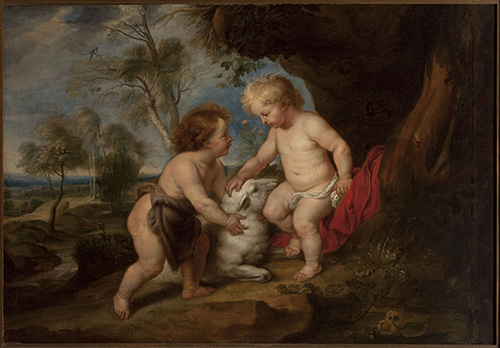
Our passage begins: ‘When Jesus received the news of John the Baptist’s death, he withdrew by boat to a lonely place where he could be by himself.’ (The Bible text I use most often uses the word ‘deserted’ rather than ‘lonely’.)
It invites us to reflect on how we process grief.
The text is accommodating: ‘When Jesus received the news of John the Baptist’s death’ — for goodness’s sake, his cousin had just had his head chopped off!
For all we know, Jesus and John may have played together as children. They may have gone to the same school and been in the same class. Knowing Judaic traditions, they most certainly would have shared meals together.
News of death is received individually, and so is grief.
Even within a family, members attend to their grief in individual ways — ‘our dad’ in life becomes ‘my dad’ in death.
News of another’s death closes a relationship. As each relationship is particular to the two people involved, so too is how its closure is managed.
Grief is as individual as a fingerprint.
The Swiss psychiatrist Carl Jung called grief a natural, sacred inner journey.
Jesus’ own journey took him across water: ‘He withdrew by boat to a deserted place where he could be by himself.’
And what happens? He is met by a crowd.
How often this happens in life, around grief. Wanting to be alone, I am met by a crowd — well-meaning, to be sure, but at times intrusive with their presence, their advice, their suggestions, and their counsel.
Grief is as individual as a fingerprint.